
Choosing a diamond involves more than comparing carat weights and prices. Shoppers who want to buy lab grown diamonds also need to consider cut quality, certification, dimensions, colour, clarity and how the stone will look once it is set in jewellery.
Lab-grown diamonds have the same crystal structure and fundamental optical characteristics as diamonds formed naturally underground. Their origin is different: they are created in controlled laboratory conditions rather than extracted from the earth. For UK buyers, that creates another option when balancing appearance, specifications, budget and personal preferences.
A good buying decision starts with understanding which characteristics actually affect what you see.
Table of Contents
What Should You Check Before Buying a Lab-Grown Diamond?
The familiar 4Cs — cut, colour, clarity and carat weight — remain useful, but they should not always receive equal attention.
For many buyers, cut deserves particular consideration because it has a major influence on how effectively a diamond handles light. A well-proportioned diamond can appear bright and lively, while a stone with less effective proportions may look less impressive even if its colour or clarity grade is technically higher.
The other factors help refine the choice:
- Colour describes the presence or absence of noticeable body colour.
- Clarity evaluates internal inclusions and external characteristics.
- Carat weight measures weight rather than the visible diameter of the stone.
- Dimensions help indicate how large a diamond may actually appear when viewed from above.
Looking at these characteristics together usually gives a more useful picture than selecting a diamond because one grade looks impressive on paper.
Why Certification Matters
A grading report gives buyers an independent description of a diamond’s key characteristics. Depending on the laboratory and report, this can include measurements, carat weight, colour, clarity, cut information and other identifying details.
Certification is particularly useful when comparing several stones online. Two diamonds may have the same listed carat weight while differing in dimensions, proportions or clarity characteristics.
Before purchasing, check that the grading information provided for the diamond corresponds with the stone being offered. Buyers should also understand what information the grading report covers rather than treating the certificate itself as proof that one diamond is automatically more attractive than another.
A report provides specifications. The final visual result still depends on how those specifications work together.
Cut Quality Can Matter More Than a Higher Grade
It is easy to become focused on achieving the highest possible colour or clarity grade. In practice, paying for improvements that are difficult to see without magnification may not always be the best use of a jewellery budget.
Cut and proportions can have a stronger impact on visible sparkle and brightness.
Round brilliant diamonds are particularly associated with precise light performance, but proportions matter for fancy shapes too. Oval, pear, cushion, emerald and radiant cuts each produce a different visual effect.
An emerald-cut diamond, for example, has broad step-like facets and a more open appearance. This can make some inclusions easier to notice than they would be in a brilliant-style cut. A cushion or radiant diamond uses a different faceting pattern and can disguise certain clarity characteristics more effectively.
This is why buying criteria should change with the diamond shape rather than following a single grading formula.
Carat Weight and Visible Size Are Not the Same
Carat describes a diamond’s weight, not its face-up dimensions.
Two diamonds of identical carat man made diamonds can look different in size because their proportions distribute that weight differently. One may carry more depth below the surface, while another may have greater visible width or length.
For elongated shapes such as oval, pear and marquise diamonds, length and width are particularly useful measurements. Buyers may also want to consider the length-to-width relationship because it affects whether the stone looks broader, narrower, longer or more compact.
This is a useful reminder that buying purely by carat number can be misleading. Comparing millimetre dimensions alongside weight gives a better idea of how the diamond may appear on the finger.
Choosing Colour and Clarity Without Overspending
Higher grades can increase cost, but the highest available grade is not automatically necessary for every buyer.
The goal with clarity is often to find a diamond that looks clean during normal viewing rather than paying for microscopic differences that are difficult to appreciate without magnification. The location, size and type of inclusions can matter as much as the grade itself.
Colour should also be considered in context. Diamond shape, setting style and metal colour can influence how noticeable subtle colour differences appear.
A white-metal setting such as platinum or white gold may make colour comparisons more apparent, while yellow or rose gold creates a different visual environment around the stone.
The practical approach is to balance grades according to what can genuinely be seen.
Which Diamond Shape Suits Your Style?
Diamond shape changes the personality of a piece of jewellery considerably.
| Diamond shape | Typical visual character | Useful consideration |
|---|---|---|
| Round | Classic and highly brilliant | Prioritise cut and proportions |
| Oval | Elongated and elegant | Compare outline and visible bow-tie effect |
| Cushion | Soft, rounded profile | Facet patterns can vary noticeably |
| Emerald | Clean, architectural look | Clarity can be more visible |
| Pear | Distinctive teardrop profile | Check symmetry and outline |
| Radiant | Angular with brilliant faceting | Compare proportions and shape preference |
There is no universally superior shape. Someone seeking a traditional engagement ring may prefer a round brilliant, while another buyer may value the finger-lengthening appearance of an oval or the geometric character of an emerald cut.
Match the Diamond to the Ring Setting
The setting affects both appearance and everyday practicality.
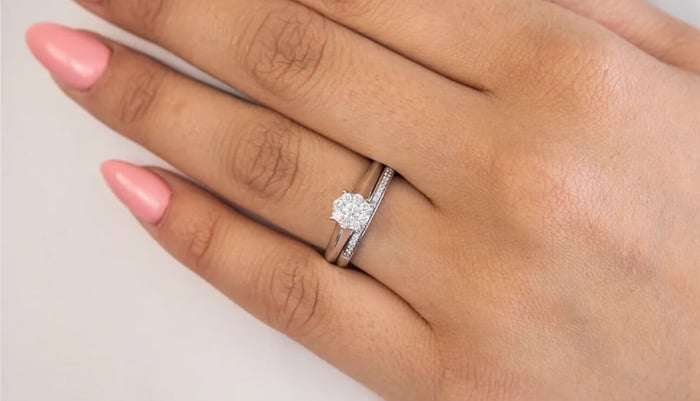
A solitaire puts most of the visual attention on the centre stone. A halo adds surrounding stones that can increase overall visual presence. Pavé settings introduce smaller diamonds along the band, while bezel-style settings surround more of the diamond’s edge with metal.
Lifestyle should influence this decision. Intricate designs can provide more detail, but simpler settings may appeal to buyers who prefer understated jewellery or easier day-to-day maintenance.
Prong placement also matters with shapes that have pointed areas. Pear and marquise diamonds, for example, need suitable protection around vulnerable tips.
The best setting is therefore not simply the most decorative one. It should complement the diamond while fitting the wearer’s routine and personal style.
How to Compare Lab-Grown Diamond Options More Effectively
Online shopping makes it possible to compare a large number of diamonds, but more choice can make the process harder if every specification is treated as equally important.
A better method is to set priorities before comparing individual stones. Decide on the preferred shape, approximate budget and desired visible size first. Then compare cut quality, proportions, colour and clarity within that range.
UK shoppers researching where to buy lab grown diamonds can use specialist diamond retailers such as NOVITA Diamonds as one reference point when comparing available shapes, specifications and jewellery options.
Try to evaluate the complete combination rather than chasing a single high grade. A slightly lower clarity grade combined with stronger proportions, for example, may suit one buyer better than paying more for microscopic clarity improvements.
Avoid Buying From the Certificate Alone
Diamond grading reports are valuable, but numbers cannot completely describe appearance.
Fancy-shaped diamonds with similar grades can have noticeably different outlines and facet patterns. Even two oval diamonds with comparable specifications may differ in how balanced, elongated or lively they appear.
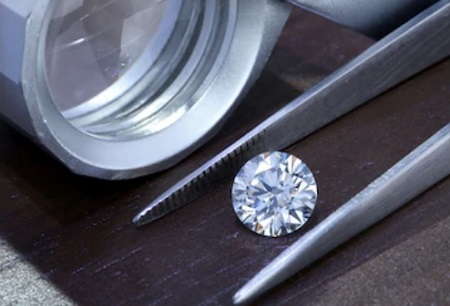
Where detailed imagery or video is available, use it alongside the grading information. Look at the stone’s shape, symmetry and overall pattern rather than relying only on filters.
The strongest purchase decision combines measurable quality with personal preference. A diamond should satisfy the technical criteria that matter to you, but it should also look right in the jewellery you actually plan to wear.